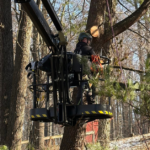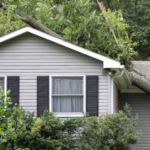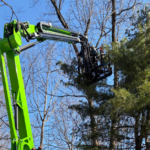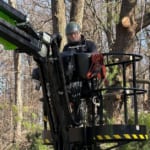
A fallen tree can’t wait until Monday. We respond day and night — storm damage, wind events, and structural failures across Cumberland, York, and Adams Counties.

Emergency Tree Removal
When a tree falls or becomes structurally unstable, it becomes an immediate safety hazard that requires fast action. Emergency tree removal is designed to quickly eliminate danger caused by storm damage, high winds, root failure, or sudden structural collapse.
Mason Dixon Tree and Land Experts provides 24/7 emergency tree removal across Cumberland County, York County, and Adams County, responding to trees on homes, blocked driveways, and hazardous leaning trees. We arrive with the equipment needed to safely remove the hazard, secure the site, and restore access as quickly as possible.
What We Handle
24/7 Emergency Tree Service
- Fallen trees on structures
- Storm and wind damage
- Blocked roads and driveways
- Dangerous leaning trees
- Downed limbs on or near power lines
- Root failures and uprooted trees
When a Tree Becomes a Crisis
Tree on Your Home
A tree or major limb on a structure is a structural emergency. We respond immediately to safely remove the tree and can coordinate with insurance adjusters if needed.
Storm & Wind Damage
Severe storms regularly impact Cumberland County, York County, and Adams County. We respond 24/7, even during active weather events.
Blocked Driveway or Road
If a fallen tree blocks access to your property, it is an emergency. We cut, clear, and remove debris quickly to restore access.
Dangerous Lean or Structural Failure
A sudden lean or visible trunk crack can indicate imminent failure. Immediate removal prevents catastrophic damage.
Flood & Root Failure
Heavy rainfall and saturated soil weaken root systems, often leading to sudden tree collapse that requires urgent removal.
Commercial & Farm Emergencies
We respond to farms and commercial properties where fallen trees block access, damage structures, or disrupt operations.
What Happens When You Call
Emergency tree service is immediate — no waiting, no callbacks.
01 You Call — We Answer
A live dispatcher collects details: location, hazard type, injuries (if any), and utility involvement.
02 Crew Dispatched
The nearest available crew is sent immediately with the appropriate equipment for the situation.
03 On-Site Assessment
We evaluate structural risks, utility hazards, and determine the safest removal method before any cutting begins.
04 Safe Removal & Cleanup
We remove the hazard, clear debris, and restore safe access. Full cleanup or follow-up stump work can be scheduled if needed.
05 Insurance Documentation
We provide written reports and photo documentation for insurance claims and utility coordination.
South-Central PA Has a Specific Storm Profile
This region doesn’t get one type of severe weather — it gets several. Late winter nor’easters drop heavy wet snow that snaps limbs at a weight-to-strength ratio that dry snow never approaches. Summer thunderstorm lines move fast off the Appalachians, generating straight-line winds that topple root-bound trees in saturated ground. Ice storms in early spring coat every surface and can triple the weight load on a canopy in a matter of hours.
We’ve worked through all of it, across all three counties, for over two decades. We know which species fail first in high-wind events (silver maples, Bradford pears, white pines). We know which soil types across the region lose their grip fastest when waterlogged. That knowledge makes our assessment faster, our work safer, and our response more effective than a generalist crew working a region they don’t know.
Full Scope of Emergency Work
- 24/7 emergency tree removal — any size, any species
- Trees on homes, garages, sheds, and outbuildings
- Limb removal from utility lines (coordination with utility companies)
- Post-storm assessment and hazard documentation
- Blocked road and driveway clearance
- Crane and rigging work for confined or complex removals
- Emergency cabling and bracing for salvageable trees
- Stump grinding and root removal after emergency extraction
- Insurance documentation and photo records
- Follow-up cleanup scheduling after emergency stabilization