
Emerald ash borer has already spread to every county in Pennsylvania, and it kills ash trees silently for one to three years before most homeowners notice anything is wrong. If you have an ash tree on your property, there is a real chance it is already under attack even if it still looks healthy.
By the time visible damage appears, the window for saving the tree is often already closed. What remains is a structural hazard. Dead ash trees become extremely brittle as moisture leaves the wood, and they can fail without warning. A dying or dead ash near a driveway, roofline, or fence line is not just a tree problem, it is a property and liability problem.
This guide explains how to identify emerald ash borer damage, how quickly it progresses, and when action is necessary.
Key Takeaways
- EAB has been confirmed in all 67 Pennsylvania counties and is expected to kill virtually every untreated ash tree in the state.
- New infestations can go undetected for up to three years while larvae destroy the tree from the inside.
- The most reliable early signs are D-shaped exit holes, S-shaped tunnels under peeling bark, and canopy dieback starting at the top.
- Woodpecker activity on an ash tree is often the first visible red flag, as birds detect and target larvae beneath the bark.
- Once a tree loses more than 50 percent of its canopy, treatment is generally not effective and removal is the safer option.
- Pennsylvania homeowners can be held liable for damage caused by a known hazard tree that was not addressed.
Quick Signs Your Ash Tree May Have Emerald Ash Borer
If you want a fast starting point before reading the full breakdown, check for these:
- D-shaped exit holes punched through the outer bark
- S-shaped tunnels visible when loose bark is peeled back
- Crown dieback starting at the very top of the tree
- Heavy or unusual woodpecker activity on the trunk
- New shoots growing in clusters from the base of the trunk
- Thinning canopy or leaves dropping earlier than normal
Any one of these on an ash tree warrants a closer look. More than one is a serious warning.
What Is the Emerald Ash Borer and Why It Kills Ash Trees
The Emerald Ash Borer (Agrilus planipennis) is a small metallic green beetle native to northeastern Asia. In North America, it has no natural predators capable of keeping its population in check, which is why it has spread so aggressively since arriving in Michigan in 2002. It reached western Pennsylvania by 2007 and by 2019 had been confirmed in every county in the state.
The adult beetle is roughly a third of an inch long with a bright metallic green shell and a red-purple abdomen visible when its wings spread. But the adult stage is not what kills your tree. The damage is done entirely by the larvae, which hatch under the bark and spend months tunneling through the phloem, the living tissue that moves nutrients and water from the roots to the canopy.
As larvae chew through this tissue in long winding paths, they cut off the tree’s lifeline. The tree starves from the top down. Most ash trees die within three to five years of initial infestation, and Pennsylvania’s DCNR estimates the state has approximately 308 million ash trees at risk.
Because larvae feed inside the tree, the damage is completely invisible in the early stages. That is the central challenge for homeowners: by the time you can clearly see something is wrong, the tree may already be beyond saving.
How to Identify an Ash Tree on Your Property
Before you look for EAB damage, confirm you actually have an ash tree. Ash trees (Fraxinus spp.) are among the most common landscape and street trees across Pennsylvania, so there is a reasonable chance your property has at least one.
Key identifying features:
- Compound leaves with 5 to 11 leaflets arranged in opposite pairs along a central stem
- Leaflets that are directly opposite each other, not staggered or alternating
- Bark that forms a distinctive diamond-shaped ridge pattern on mature trees
- Opposite branching structure, meaning branches grow in pairs directly across from each other
- Seeds that grow in clusters of single-winged, paddle-shaped samaras, often called helicopter seeds
White ash (Fraxinus americana) and green ash (Fraxinus pennsylvanica) are the two dominant species in Pennsylvania. Both are fully susceptible to EAB. The white fringetree, a close botanical relative, is also vulnerable.
7 Signs of Emerald Ash Borer Damage on Pennsylvania Ash Trees
These signs range from early indicators that are easy to miss to late-stage warnings that require immediate action. Check your tree carefully before assuming it is healthy.
1. D-Shaped Exit Holes in the Bark
This is the single most definitive sign of EAB. When adult beetles emerge from beneath the bark in late spring and early summer, they chew through the outer bark and leave a distinct D-shaped hole roughly the size of a small brad nail, about 1/8 inch wide. The flat top edge of the D is the giveaway. Round holes indicate a different wood-boring insect, not EAB.
Run your hands along the bark on the trunk and major limbs. The holes are small but unmistakable once you know what to look for.
2. S-Shaped Galleries Under the Bark
EAB larvae do not burrow straight through the wood. They feed in long, winding S-shaped paths through the cambium and phloem layer just beneath the outer bark. These galleries are packed with a fine, sawdust-like material called frass.
If you peel back a section of bark that appears loose or cracked and find winding channels filled with fine debris, EAB is almost certainly the cause. This is the clearest direct confirmation of an active or past infestation.
3. Canopy Dieback Starting From the Top
Because EAB larvae sever the nutrient pathways inside the tree, the effects appear first at the very top of the canopy. Look for branches at the crown that fail to leaf out in spring, appear thin and sparse, or drop leaves before the rest of the tree.
Dieback progressing steadily downward from the top is one of the most reliable EAB indicators. By the time you see 30 to 50 percent canopy loss, the tree is in serious decline and options are narrowing fast.
4. Increased Woodpecker Activity
Woodpeckers are one of the few native species that actively hunt EAB larvae. When birds locate a tree with larvae beneath the bark, they hammer aggressively into the wood and strip large jagged patches of bark away in the process.
This bark stripping is called blonding and appears as pale, exposed patches across the upper trunk and main limbs. If you notice woodpeckers spending unusual amounts of time on an ash tree in your yard, do not dismiss it. The birds have often detected an infestation before any visible decline in the canopy begins.
5. Epicormic Sprouts at the Base of the Trunk
When a tree is under severe internal stress, it sometimes produces a flush of new shoots from the base of the trunk or from the root collar. On ash trees, these sprouts growing from the lower trunk and root flare are a distress response, not a recovery sign.
This is the tree attempting to redirect energy away from a failing canopy. It is a late-stage indicator and worth taking seriously.
6. Bark Splits and Vertical Cracks
As larval galleries disrupt the cambium layer and internal tissue begins to die, the outer bark can split vertically. This happens because the bark is no longer being supported uniformly by healthy living tissue underneath. Vertical splits or sections of bark that appear to be separating from the trunk warrant immediate investigation.
7. Thinning Foliage and Early Leaf Drop
If an ash tree that was previously healthy is producing smaller leaves, noticeably sparser coverage, or dropping leaves in mid-summer, EAB damage may be disrupting nutrient delivery from the roots. This sign is less specific on its own but becomes significant when combined with any of the others above.
EAB Damage Stage Reference Chart
| Stage | Canopy Loss | Visible Signs | Recommended Action |
| Early (Year 1-2) | Under 15% | Woodpecker activity, faint exit holes | Consult arborist, treatment may be viable |
| Moderate (Year 2-3) | 15% to 50% | Crown dieback, D-holes, bark galleries | Treatment possible if under 50% canopy loss |
| Advanced (Year 3-4) | 50% to 75% | Significant dieback, epicormic sprouts, bark cracking | Removal recommended, treatment unlikely to work |
| Critical (Year 4+) | Over 75% | Tree mostly dead, brittle structure, top-down failure | Immediate removal required, hazard risk is high |
Why EAB-Damaged Ash Trees Are a Serious Liability for PA Homeowners
This is the part most homeowners underestimate. A dead or severely weakened ash tree is not just an eyesore. It is a legal and financial exposure.
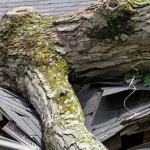
Ash trees die from the top down, which means the upper limbs become dry and brittle well before the trunk shows obvious rot. Unlike decay failures in other species that often give some advance warning, a structurally compromised ash can drop large sections of crown with very little notice. That is especially dangerous near a structure, vehicle, walkway, or power line.
Under Pennsylvania property law, a homeowner who is aware of a hazard tree and fails to act can be held liable for resulting damage. Awareness is the key factor here. If you have noticed signs of EAB and done nothing, and the tree later fails and damages a neighbor’s property, you may find your insurance coverage complicated and your legal exposure real.
There is also a practical problem unique to ash trees. Pennsylvania tree law attorneys note that arborists are often unwilling to climb a heavily EAB-damaged ash because the upper structure is too unstable to work in safely. That means removal requires crane equipment, which significantly increases the total cost. Acting early, before the tree is fully dead, is almost always less expensive and safer than waiting.
Emerald Ash Borer Is Already Widespread Across South Central Pennsylvania
EAB damage is now well established across Cumberland County communities including Gettysburg, Hanover, Littlestown, New Oxford, and surrounding areas. Many properties throughout South Central Pennsylvania have mature ash trees that were planted decades ago as shade trees, which means homeowners are now dealing with large, high-risk trees as infestations progress through their later stages.
If your property has a mature ash in this region, the question is no longer whether EAB is present in the area. It is whether your specific tree has already been reached.
What Pennsylvania Homeowners Should Do if They Suspect EAB
Step 1: Walk the Tree and Look for the Signs Listed Above
Start with a thorough ground-level inspection. Check the bark on the trunk and major limbs for D-shaped holes. Look up at the canopy for dieback beginning at the crown. Examine any areas where bark appears loose, cracked, or where woodpeckers have been actively working.
Step 2: Get a Professional Assessment
A certified arborist can confirm EAB, assess how far the infestation has progressed, and give you a clear recommendation on treatment or removal based on the actual condition of your tree. The International Society of Arboriculture maintains a directory of ISA-certified arborists if you need help locating a qualified professional.
Step 3: Understand Your Treatment Options
Treatment is only appropriate for trees healthy enough to benefit from it. According to the Pennsylvania DCNR, trees that have already lost more than 50 percent of their canopy are generally not good candidates for insecticide treatment. For early-stage or not-yet-infested trees, systemic insecticides applied by a licensed applicator can be effective. Products are applied as soil injections or trunk injections, each with different timing requirements and retreatment intervals.
Step 4: Prioritize Removal for Any Tree That Poses a Hazard
If the tree is dead or nearly dead and is within reach of your home, a neighboring structure, a driveway, or a public area, professional tree removal is the right call. Dead ash trees often require specialized equipment and cannot be safely climbed, which makes early removal considerably less expensive and more straightforward than waiting.
Step 5: Plan a Replacement
Once an ash is removed, replanting with a different species is a sound decision. This is an opportunity to introduce diversity into your yard’s tree canopy and reduce vulnerability to a single future pest event. An arborist familiar with your site conditions in Pennsylvania can help you choose the right replacement species.