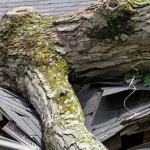

The trees most likely to damage your home during a storm are not usually the ones that get struck by lightning or toppled by a freak gust. They are the ones that were already compromised before the storm arrived. A crack that had been forming for years. A root system quietly rotting beneath the surface. A trunk hollowed by decay while the canopy still looked full and green.
Pennsylvania experiences some of the most damaging storm weather in the Northeast. Severe spring and summer thunderstorms regularly produce straight-line winds exceeding 60 miles per hour, and the Pennsylvania PUC’s 2023 reliability report identified falling trees as the primary cause of power outages statewide, with many of those trees already weakened by disease or infestation before the storm hit.
Knowing what to look for before the next weather event is one of the most practical things a homeowner can do to protect their property and the people on it.
Key Takeaways
- Most storm-related tree failures involve trees that were already structurally compromised before the wind arrived.
- The six primary hazard indicators are crown dieback, trunk cracks, fungal growth, codominant stems, root zone problems, and sudden lean.
- A tree can carry a full canopy of green leaves and still be structurally unsound due to internal decay.
- Dead branches in the canopy are called widow makers for a reason: they can fall on calm days without any wind at all.
- Pennsylvania homeowners can be held liable for damage caused by a hazard tree they knew about or reasonably should have known about.
- The best time for a hazard assessment is before storm season, not after the damage is done.
Quick Hazard Checklist: Walk Your Property and Look for These
Before reading the full breakdown, do a quick pass of every significant tree on your property and check for:
- Dead or hanging branches in the upper canopy
- Cracks or splits in the trunk or at major branch unions
- Mushrooms, conks, or shelf fungi growing on the trunk or at the base
- V-shaped forks where two large stems meet
- A lean that has changed or appeared recently
- Heaving, cracked, or soft soil at the base of the tree
- Cavities or hollow sections anywhere on the trunk
- Bark that is missing, sunken, or discolored in patches
Any one of these warrants a closer look. Multiple signs on the same tree mean you should stop waiting and call a certified arborist.
Why Pennsylvania Storm Season Is Especially Hard on Trees
Pennsylvania sits in a region where warm Gulf air and cooler northern systems collide, producing some of the most intense thunderstorm activity in the eastern United States. The storms that develop from these collisions often produce straight-line winds capable of snapping large-diameter branches or uprooting entire trees with no warning.
What makes this particularly dangerous right now is the condition of Pennsylvania’s tree canopy. Decades of established hardwoods are aging across the state at the same time that invasive pests and diseases are significantly weakening tree populations. The Emerald Ash Borer has compromised or killed hundreds of millions of ash trees across all 67 Pennsylvania counties. Beech leaf disease has spread statewide. Hemlock woolly adelgid has reached every county. Each of these threats produces trees that look alive but are structurally failing underneath.
The result is that Pennsylvania’s storm risk is not just about weather severity. It is about a tree canopy that has never been more structurally vulnerable.
What Makes a Tree a Hazard Tree
A hazard tree is not simply an old tree or an imperfect one. The International Society of Arboriculture defines a hazard tree as one that combines two conditions: a structural defect that creates a realistic likelihood of failure, and a target within the failure zone, meaning a person, vehicle, structure, or utility line that would be affected if the tree or a part of it came down.
A tree growing in an open field with no structures or people nearby may have significant internal decay and still not technically qualify as a hazard. The same tree 30 feet from your roofline is a completely different situation.
Three questions determine whether a tree is a hazard on your property:
- Is there a structural defect present?
- How likely is that defect to cause failure?
- What is in the path if it does fail?
The more people or property in the target zone, the more urgently even a moderate defect needs to be addressed.
8 Warning Signs of a Hazardous Tree
1. Dead Branches in the Canopy (Widow Makers)
Dead branches are the most immediate and underestimated hazard in residential trees. They are referred to as widow makers by arborists because they can fall without any wind, storm, or warning. Dead wood loses its moisture and flexibility. Living branches can bend under load. Dead branches cannot, and they snap.
Look up into the canopy and identify any branches that have no leaves during the growing season, show bare gray or brown wood with peeling bark, or are clearly dry and brittle compared to surrounding growth. Pay special attention to dead branches larger than four inches in diameter that hang over any area people use regularly.
2. Cracks and Splits in the Trunk
A crack in bark that extends through to the interior wood is not a cosmetic issue. It indicates that the wood fibers are already separating under load. According to Penn State Extension, two vertical cracks on opposite sides of a trunk can indicate root injury and is considered an extremely dangerous condition.
Cracks are especially serious when they appear at branch unions, where two large stems diverge from the trunk, or where prior storm damage has created a wound that never healed properly. If you can fit your fingers into a crack or see daylight through a split, the tree needs professional evaluation immediately.
3. Codominant Stems with V-Shaped Unions
When a tree develops two or more main stems growing upward at roughly the same rate, those stems compete for dominance and typically form a V-shaped union where they diverge. V-shaped unions are structurally weak. The wood fibers at the junction do not interlock the way they do in a healthy U-shaped union, and bark is often embedded between the stems, preventing the wood from forming a solid connection.
Under wind load or ice accumulation, codominant stems have a high tendency to split apart at the union, often sending one or both stems falling in different directions. Large trees with codominant stems over structures or vehicles need to be evaluated and potentially cabled or removed.
4. Fungal Growth on the Trunk or Root Flare
Mushrooms, conks, or bracket fungi growing on the trunk, at the base of the tree, or along the root flare are almost always a sign of internal decay. Fungal fruiting bodies on a tree mean the fungus has already colonized the interior wood and has been active long enough to reproduce. By the time visible fungi appear on the outside, the decay inside is typically significant.
Not every fungal growth means the tree is about to fall, but it does mean the structural integrity of the wood is compromised to some degree. The size, location, and type of fungus all matter, which is why any tree showing fruiting bodies near the base or on major limbs warrants professional assessment.
5. Root Zone Problems
Root defects are the most dangerous hazard because they are the hardest to see. A tree with a compromised root system can carry a full, healthy-looking canopy right up until the moment it uproots completely in a storm. There is very little visible warning, and the entire tree comes down.
Signs of root zone problems to look for from the surface:
- Soil that is heaving, cracking, or mounding at the base of the trunk
- Soft or spongy ground around the root flare
- Mushrooms growing at or near the base
- Roots that have been cut or damaged by construction, trenching, or paving
- A visible root flare that has been buried under fill soil or mulch for years
Construction activity within the root zone is one of the leading causes of delayed tree failure. Roots can extend two to three times the height of the tree outward from the trunk, and damage done during a driveway project or utility installation may not cause visible tree decline for three to five years afterward.
6. Trunk Cavities and Advanced Decay
Cavities in a tree trunk indicate wood that has already decomposed. Not every cavity is an immediate threat, as some trees successfully compartmentalize old wounds and remain structurally sound for many years. But larger cavities, cavities at the base of the trunk, or those showing wet, soft, or crumbling wood on the interior are serious structural concerns.
A useful rough rule from arborists: if the walls of a cavity are less than one third of the trunk’s diameter in thickness, the structural integrity of that section may be significantly compromised. That evaluation requires an arborist with proper tools. Do not assume a hollow tree is safe simply because it has leaves.
7. A New or Worsening Lean
Many trees develop a natural lean over time, growing toward available light, and that lean alone does not make them dangerous. What is dangerous is a lean that has developed recently or is visibly progressing.
A sudden or worsening lean almost always indicates root failure or soil instability on one side of the tree. If you notice a tree that seems to be leaning more than it was six months ago, or if you can see soil heaving on the side opposite the lean, that tree needs professional attention before the next significant wind event.
8. Bark That Is Missing, Sunken, or Dead
A canker is a localized area of dead bark on the trunk or a major branch. Cankers develop when pathogens or mechanical wounds kill the cambium layer in a specific area, and the dead bark either falls away or remains sunken and discolored. The structural risk depends on the size and location of the canker. A canker that extends halfway around the diameter of a branch or trunk at a given point significantly weakens that section.
Missing bark from unexplained causes, streaks of discoloration running vertically on the trunk, or areas where the bark feels loose and detached all warrant investigation.
The Invisible Problem: A Green Tree Is Not Always a Safe Tree
This is the point most homeowners miss. Structural failure in trees is frequently internal, and the canopy above can remain full and healthy-looking while the wood beneath is compromised by decay, root rot, or cracking.
A tree with extensive heartwood decay may still produce a full canopy of leaves every spring because the outer shell of wood, the sapwood and bark layer, continues to move water and nutrients even while the interior rots out. From the ground, the tree looks fine. From an arborist’s perspective, the interior may have little structural integrity left.
This is why a visual inspection by a homeowner, while valuable, has real limits. An arborist performing a full risk assessment will use sounding techniques, probes, and sometimes resistograph drilling to evaluate what is happening inside the wood where it cannot be seen from the surface.
Tree Species in Pennsylvania That Carry Higher Storm Risk
Some tree species are more prone to storm failure than others, either because of naturally brittle wood, shallow root systems, or susceptibility to the diseases and pests currently affecting Pennsylvania’s canopy.
| Species | Primary Risk Factor |
| Silver maple | Fast-growing, weak wood, prone to branch breakage |
| Bradford pear | Structurally weak multi-stem form, splits readily |
| White willow | Brittle wood, shallow roots, high uprooting risk |
| Ash (all species) | EAB infestation causing statewide mortality and structural failure |
| Eastern white pine | Vulnerable to ice and wind loading, branch breakage |
| Norway maple | Shallow roots, prone to girdling root problems |
| Cottonwood | Large-diameter branch failures common in wind events |
Having one of these species on your property does not mean the tree is automatically hazardous. It does mean it deserves closer attention than a species with naturally stronger wood or a deeper root system.
Before vs. After Storm Season: Why Timing Matters
The right time to assess and address hazardous trees is before storm season arrives, not after. This sounds obvious, but most homeowners only think about their trees in the aftermath of a damaging event.
There are practical reasons timing matters. Emergency tree removal after a storm failure costs significantly more than planned removal. A tree that has fallen on a structure requires crane equipment, debris management, and potential roof or fence repair on top of the tree work itself. Arborists are in extremely high demand in the days following a significant storm event, and wait times increase while you are trying to manage active property damage.
There is also a liability dimension specific to Pennsylvania. Insurance policies in the state may exclude coverage for damage caused by trees that were already known to be hazardous. If you identified a problem tree, took no action, and it subsequently caused damage during a storm, your insurer may have grounds to deny or reduce the claim. Documenting a professional arborist assessment and acting on their recommendations is one of the clearest ways to protect your coverage.
How to Inspect Your Trees Before Storm Season: A Practical Walkthrough
You do not need any special equipment to do a useful preliminary inspection. Walk each significant tree on your property and work systematically from the ground up.
Start at the root zone. Look for heaving or cracked soil, mushrooms, exposed roots that have been cut or damaged, and any signs of soft or wet ground near the trunk. Walk around the full base of the tree.
Move to the trunk. Examine the bark for cracks, splits, missing sections, cankers, and fungal growth. Look at the point where major branches meet the trunk, particularly any V-shaped unions. Knock on the trunk at different heights with your knuckle. Solid wood produces a sharp knock. A hollow or decayed section produces a dull thud.
Look up at the canopy. Identify any branches that are dead, hanging, or visibly broken and lodged in the upper crown. Note whether the canopy is full and even or has obvious thin or dead sections. Look for any signs of the tree leaning in a direction it was not leaning previously.
Consider the target zone. Step back and look at where the tree or its major limbs would land if they failed. A tree with moderate defects growing well away from any structure carries very different risk than the same tree with its crown extending over your roof.
Any tree where multiple defects are present, or where a single significant defect exists directly over a structure or frequently used area, should be evaluated by a certified arborist before storm season begins.